
Why does your paycheck disappear so fast, even when you swear you are practicing intentional spending?
You get paid on Monday. By the following week, half of it is gone. And the strange part is that you cannot even name what you bought. A coffee here, a lip oil there, a “treat” that somehow turned into three treats. You open your banking app and feel that little drop in your stomach.
I know that feeling very well. For a long time I wondered why money just kept flowing out of my hands. I downloaded money tracking apps. I drew cute little graphics of my income and my outgoings. I color-coded everything. And I still did not get any further.
At some point I just thought, why even bother? Some people are simply not the saving type, and maybe I am one of them. That turned out to be completely wrong.
The short version
- Intentional spending means every unit of money has a job you chose on purpose, before you spend it.
- A budget shows what you have. Intentional spending decides why you spend it.
- Sort every purchase into a must (keeps your life running) or a can (lovely, but optional right now).
- Spend more on evergreen pieces, less on seasonal trends. Cost per wear tells you the truth.
- Pay necessities first, plan the rest, and save or invest what is left at the end of the month.
The Luxury Trap Nobody Warns You About
Here is what I realized about myself. Yes, I have a tendency to overspend. And yes, somewhere deep down I had this belief that I work hard so I can afford the life I am living, which meant every paycheck felt like permission.
The problem with that thinking is sneaky. Luxury becomes a reward system. Bad day? A new perfume. Good day? Dinner out. Tired? Something pretty from the online cart that has been waiting for you since Tuesday.
None of these purchases are wrong on their own. But together they create a pattern where money leaves your account before you have even decided what you actually want from it. And every haul video, every “things I bought this month” post, quietly tells you that a beautiful life has to be bought all at once.
It does not.
Manifesting is lovely. It is also not a financial plan.
I love manifesting. I believe in the energy you put out into the world. But you cannot spend all your money with the pure thought that someday it will come back to you. Abundance thinking works best when it sits next to a plan, not instead of one.
Money myths I used to believe
What Is Intentional Spending, Really?
Intentional spending is the habit of giving every unit of money a job you chose on purpose. You decide in advance what matters to you, let your money flow there first, and give everything else a calm “not right now.”
It sounds simple, and it is. The hard part is that it starts in your head, long before it shows up in a spreadsheet.
Intentional spending vs. budgeting
People often mix these two up. A budget is the map: it tells you how much you have and where it can go. Intentional spending is the driver: the decision behind every purchase. You can have a perfect budget and still blow through it, because the budget never asked you why you were spending. That was exactly my problem with all those apps and graphics. I had the tools. I did not have the mindset.

Must vs. Can: The Question That Changed Everything
This is the single most useful filter I use now. Before I buy something, I ask myself whether it is a must or a can.
A must keeps your life running. Rent, bills, groceries, transport, the basics you would feel immediately if they disappeared. A can is something you would love to have, but your life works perfectly without it right now.
My favorite example: do you need to own an expensive perfume that costs the same as feeding yourself for weeks? Probably not. It is a can. And a can is allowed, but only when you have free money left after the musts are covered.
Of course I still have a wishlist. There are pieces I would love to own. The difference is that I stopped trying to buy everything at once. I pick one thing, I plan for it, and I enjoy it so much more because it did not come with guilt attached.
Worth Spending More vs. Not Worth It
Intentional spending does not mean cheap everything. It means spending more where it lasts and less where it fades.
Worth spending more on
- Evergreen pieces you will wear for years: a good coat, a leather bag, classic knitwear.
- Daily basics: shoes you walk in all day, skincare that works for your skin.
- Time and health savers: anything that makes everyday life easier.
Not worth a lot
- Seasonal trend pieces you will be tired of by next spring.
- Duplicates: the fourth black top, the sixth nude lipstick.
- Impulse “treats” that are really just a mood fix.

The cost-per-wear test
Divide the price by how many times you will realistically use it. A $300 coat you wear 150 times costs $2 per wear. A $60 trend top you wear three times costs $20 per wear. The “cheaper” one is suddenly the expensive one.
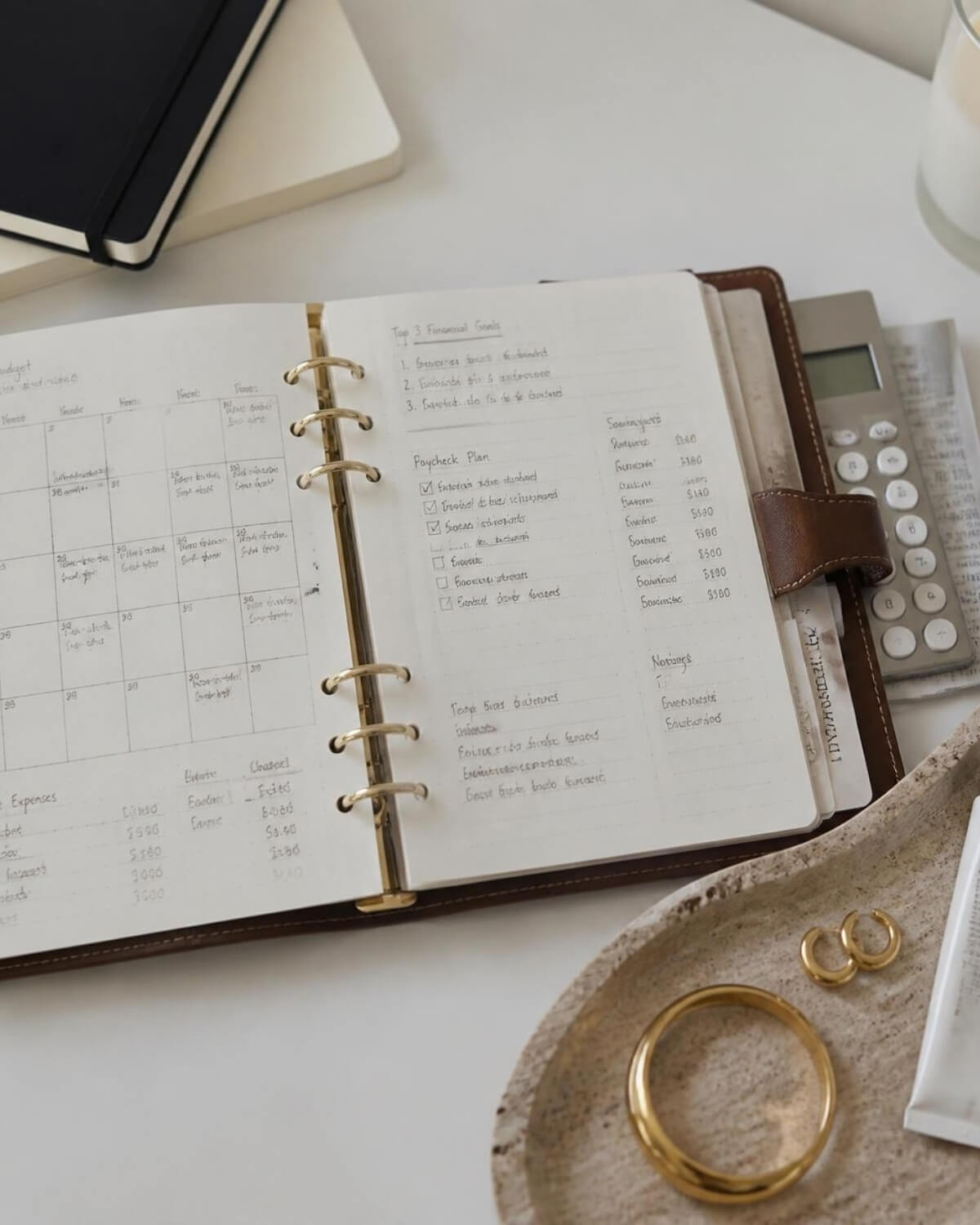
How to Start Intentional Spending: My Monthly Money Flow
This is the exact flow I use now. No complicated app, just a rhythm. Tap each step to open it.
Before you touch anything, pause. Payday is the moment most of us go straight into spending mode, so this is where the mindset shift starts.
Rent, utilities, phone, insurance, transport, debt payments. The musts go out first, ideally on the day your salary lands. Once they are gone, they cannot tempt you.
Check the real number. Not the salary number, the leftover number. This is the money you actually have to live on and play with.
This is where shopping lists come in. Groceries, household items, planned social plans, that one can from your wishlist if there is room. Write it down before the month happens, not after.
Leftover minus planned spending equals your end-of-month money. Keep it in your account for now.
I move my savings at the end of the month, not the beginning. If something unexpected happens, a vet bill, a broken phone, a last-minute train ticket, the money is still there. When my next paycheck arrives, I can freely invest last month’s leftover, knowing the new month is already covered.
A quick honest note: this works well if you trust yourself not to spend the leftover. If you know you will, the classic “pay yourself first” method, where you move savings on payday, might suit you better. There is no single right way. There is only the way you will actually keep doing.
Try it with your own numbers
Financial Wellness Starts Before the Spreadsheet
This is the part I wish someone had told me years ago. Being money conscious does not start when you draw your little graphic about your savings. It starts the moment you intentionally decide it.
Financial wellness is less about the number in your account and more about how you feel about that number. Calm instead of anxious. In control instead of surprised. Choosing instead of reacting.
So yes, intentional spending is more of a mindset shift than a thing you do. And like every mindset shift, it needs to grow into a ritual if you want it to stick. Here is how to build a savings ritual you will actually stick to. One payday of good intentions will not change anything. Twelve paydays of the same calm routine will.
Realistic Expectations: What the First Months Look Like
Month one
You will probably still overspend somewhere. You buy the thing, feel a little guilty and wonder if this is even working. That is normal.
Month two
You start noticing your patterns and catch yourself before the impulse buy, at least sometimes.
Months three and four
Payday stops feeling like a shopping signal. The end-of-month number stops being a surprise, and you have money left that you did not have to fight for.
No overnight miracle.
No perfect month.
Just a calmer relationship with money that gets easier every time you repeat it.
Budgeting Tools That Support Intentional Spending
You do not need an app to spend intentionally, but the right tool can make the habit easier. Pick one and use it for a full month before you decide. Switching tools every week is just another way of avoiding the real habit.
YNAB
Built around giving every unit of money a job before you spend it. Intentional spending in app form.
Goodbudget
Digital envelopes for groceries, shopping and beauty. Great if you like clear categories.
Monarch Money
A clean overview of accounts, goals and spending trends in one place.
A spreadsheet
My favorite. Salary, musts, planned spending, leftover. Four lines are enough.
Is Intentional Spending for You?
Tick everything that sounds like you.
It is not a quick fix. It is a calmer, more personal way of handling money, and one of the most useful personal finance tips I have ever applied to my own life. The luxury you really want is not a shopping bag, and the quiet luxury money mindset is built on exactly that idea. The real luxury is knowing exactly where your money is going, and choosing it.
Intentional Spending FAQ
What is intentional spending and how does it differ from budgeting?
Intentional spending is the habit of deciding on purpose what your money is for, based on what truly matters to you. Budgeting is the structure that shows how much you have and where it can go. A budget is the map, intentional spending is the decision behind each purchase, and the best results come from using both.
How can I start intentional spending to save more effectively?
Start on your next payday. Pay all your necessities first, check what is actually left, and write down your planned spending for the month before it happens. Sort every wanted purchase into a must or a can, and move whatever remains into savings or investments at the end of the month.
Where can I find budgeting tools focused on intentional spending?
YNAB is designed around giving every unit of money a job, which fits intentional spending well. Goodbudget works with digital envelopes, and Monarch Money gives a clear overview of goals and spending. A simple spreadsheet with salary, fixed costs, planned spending and leftover also works and costs nothing.
How do I spend less money without feeling deprived?
Keep a wishlist instead of a full cart and buy one planned item at a time. Spend more on evergreen pieces you will use for years and less on seasonal trends. When a purchase is chosen instead of grabbed, it feels more luxurious, not less.
Should I save at the start or the end of the month?
Both work. Saving on payday (“pay yourself first”) protects you if you tend to spend whatever is in your account. Saving at the end of the month keeps a safety cushion available for surprises, then lets you invest last month’s leftover once the new paycheck arrives.

Questions or collaborations: info@opulentfemme.com