

What if the most important part of your evening ritual is the part nobody will ever see?
It is late 2026, the evenings are getting darker earlier, and the internet is still obsessed with mornings. 5am routines, sunrise pilates, “that girl” coffee videos. Mornings get all the content. But nobody films the moment you close your laptop, light a candle and write ten honest minutes before bed. Nobody applauds the phone you switched off an hour early. And that is exactly why it works.
If you have been working on yourself and you feel like:
- your morning routine looks great on paper, but every day still ends with scrolling until midnight
- you start journaling and quit, because it feels like writing for an audience
- silence makes you reach for a podcast, a playlist, anything
- you go to bed wired, replaying today and pre-living tomorrow
then the problem is probably not your discipline. It is that you skipped the part of the day where the real work happens.
The version of yourself you are building is put together quietly, in the in-between hours, in practices that never make it into anyone’s highlight reel. The women who are genuinely changing from the inside out are not always the loudest ones. They are the ones doing the quiet work. Every evening.
What Are Shadow Habits?
Shadow habits are the private habits that build your real identity rather than your public image. They happen when nobody is watching, they are not made for sharing, and they exist entirely for you.
They are not complicated or mysterious. Ten honest minutes in a notebook. Five minutes of sitting in silence. Skincare done slowly instead of in a rush. One question before sleep. Small things, done in the dark, again and again.
Is this the same as shadow work?
Not quite. Shadow work, a term that comes from psychologist Carl Jung, means exploring the parts of yourself you have pushed down or hidden. Shadow habits are simply the habits that happen out of sight. The two meet in the evening: honest journaling and stillness are where a lot of that deeper inner work naturally starts.
Why Do Evenings Shape Your Identity More Than Mornings?
Evenings shape identity because they are the only time of day when you meet yourself without a role to play. The morning routine gets all the attention: wake up early, meditate, journal, move, drink your water. And yes, how you start your day matters. But the real identity work happens at night.
In the evening, after the performance of the day is over, the roles fall away. The colleague, the daughter, the friend who always answers, the social face you wear. What is left is you. And what you do with her, how you treat her, what you feed her mind and what you let her thoughts dwell on, shapes who you actually become.
Most self-development advice skips this part completely. Switch between the two below and see why it matters.
The 4 Shadow Habits of Women Doing Quiet Inner Work
These are the four that matter most. None of them takes long, and none of them is meant to be posted. Tap one to jump straight to it.
How do you journal without writing for an audience?
Journal as if the page will be burned the moment you close it. Most people who try journaling quit because they are unconsciously writing for a reader. They edit themselves. They perform insight. Real journaling, the kind that actually builds self-awareness, is honest, unpolished and never meant to be seen.
Five minutes before sleep. No prompts needed if you do not want them. Just write what is true right now. What you are carrying. What you are resisting. What you are afraid to want. What you noticed about yourself today that surprised you.
Psychologist James Pennebaker’s studies on expressive writing found that writing honestly about thoughts and feelings for 15 to 20 minutes, over a few days, was linked to better mood and health. And if tomorrow is crowding your head, a 2018 Baylor University study found that people who spent five minutes writing a specific to-do list for the next day fell asleep faster than people who wrote about what they had already finished.
Over time, this becomes one of the clearest maps of who you actually are. Try it below. Nothing you type here is saved, sent or seen. When you are done, let it go.
Draw a prompt, write for five minutes, then release it. Nothing is stored anywhere.
Why is sitting in silence so uncomfortable?
Stillness is the most underrated tool in self-development, and the one we avoid the most. We fill every free moment with input: a podcast on the commute, scrolling while we eat, background noise to soften the quiet. “I don’t like the quiet,” we say. That discomfort is exactly the signal that you need more of it.
In a 2014 University of Virginia study published in Science, participants were left alone with their thoughts for 6 to 15 minutes with the option to give themselves a mild electric shock. Two thirds of the men and a quarter of the women chose the shock over sitting quietly.
Start with five minutes. No phone, no music, no content. Just you and your thoughts. At first it will feel uncomfortable, and that is the point. Stillness is where you begin to hear yourself, and what you hear will tell you more about what you need than any productivity system ever could.

Where the real you becomes audible.
No podcast. No playlist. Five minutes at the window with nothing to consume. It feels strange, and then it feels like coming home.
Choose a length, press start and follow the light. Breathe in for four, out for six.
What does an intentional wind-down look like?
An intentional wind-down is a deliberate signal to your nervous system that the day is complete and you are allowed to rest. The way you end your day tells your body whether you are safe, cared for and allowed to switch off. Most women (and men too, of course) end the day in low-grade stress mode: one more thing to check, one more scroll, one more anxious thought spiraling into tomorrow.
It does not have to be elaborate. Dim the lights earlier than feels necessary. Do your skincare slowly, with full attention. Make something warm to drink. Read a physical book, because we are aiming for less screen time here. Sleep experts generally suggest putting screens away 30 to 60 minutes before bed.
Your evening ritual does not need to be a production. It needs to be consistent enough that your body recognizes it as the line between the day that is over and the rest you have earned. Tick what you do tonight and watch the meter move.
This list resets every evening, so you can use it night after night.
Still wired. Start with the lights.
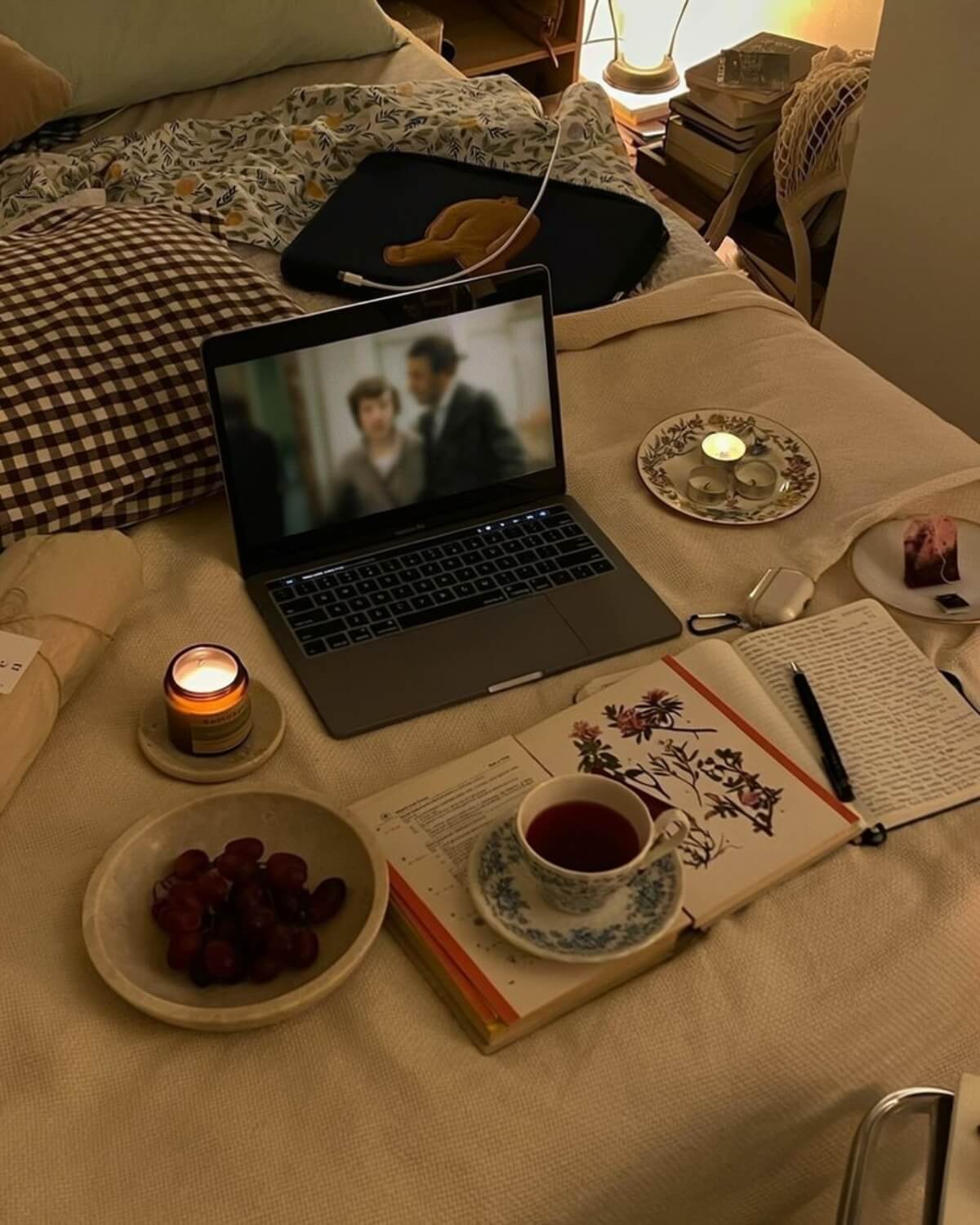
Small, warm, unhurried.
A cup of tea, a candle, a book with real pages. Nothing here is impressive. All of it tells your body the day is done.
What is the one question to ask yourself before sleep?
Before you sleep, ask yourself one question: did I act like the woman I am becoming today?
Not as a judgment. As a gentle, honest check-in. If the answer is mostly yes, let yourself feel it and acknowledge the follow-through. If the answer is not really, that is useful information, not a crisis. You are not trying to be perfect. You are trying to stay in conscious relationship with who you are choosing to be.
Asked every night, this question slowly stops being a reflection and starts shaping you. It keeps you oriented, and it closes the gap between who you are now and who you are building yourself into. Try it now.
Did I act like the woman I am becoming today?
How to Build an Evening Ritual That Actually Feels Like Yours
The evening ritual you will keep is the one built around what you actually need, not the one you copied from someone else’s routine video.
Start by asking what is missing from your evenings right now. Is it quiet? A sense of completion? The feeling of being cared for? Space to process everything the day brought? Let the answer decide what goes in.
Then start small. Choose one practice from the shadow habits above and do it every evening for two weeks without adding anything else. Let it become yours before you layer in more. A ritual that sticks grows slowly from one anchor, not from ten new things you try at once and abandon by Thursday.
Pick the one that feels most true. You get your starting practice and a two-week tracker.
Your choice and your ticked evenings are saved only in this browser.
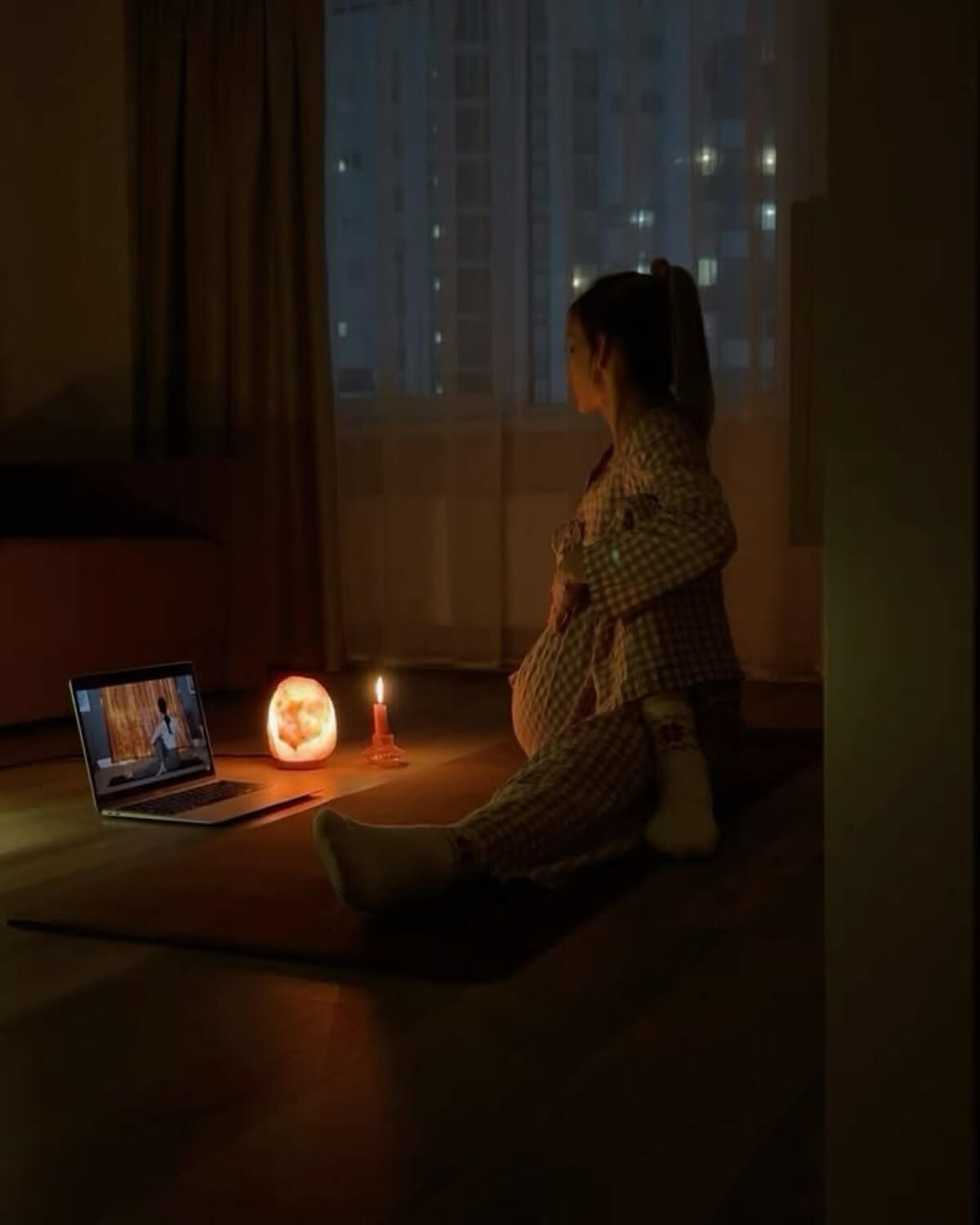
Scale down. Do not skip.
One stretch. One candle. One breath you actually pay attention to. That still counts as showing up.
What to Do When the Motivation Disappears
Build your evening ritual on identity, not motivation. Motivation comes and goes with how tired you are, how the day went and how much you already gave to other people. A ritual built on motivation is built on something that will not hold.
What keeps quiet inner work going is less exciting and far more durable: commitment to the woman you are becoming. You do not do the shadow habits because you feel like it. You do them because you are someone who does them. Inner work is often uncomfortable, and that is part of it. We do not grow in the comfort zone.
On hard nights, scale down instead of skipping. Thirty seconds of stillness. One sentence in your journal. A few breaths with real attention before you sleep. Showing up in some form matters far more than the quality of any single evening. The women who are changed by this practice are not the ones who do it perfectly. They are the ones who find a way to show up, even when it is the last thing they feel like doing.
Save this for the nights you need a reminder:

Nobody photographs this part.
The honest question, the closed book, the moment you let the day go. Invisible, and that is the power of it.
The Real You Is Built in the Dark
Nobody posts their evening ritual in real time. Nobody photographs the moment they close their eyes and ask themselves the honest question. This work is invisible, and that invisibility is part of its power.
The woman you are becoming is not put together in public. She is built quietly, every evening, through the practices nobody sees. The journaling, the stillness, the intentional wind-down, the honest question before sleep. Not who you perform. Who you actually are.
The quiet work is the real work, and it has been waiting for you.
Evening Rituals and Shadow Habits: Your Questions Answered
What is an evening ritual?
An evening ritual is a short, consistent set of practices you do every night to close the day with intention. It usually includes something to process the day, like journaling, something to calm your body, like dim lights, slow skincare and a warm drink, and a moment of reflection before sleep. Unlike a morning routine, it is built for rest and self-knowledge, not productivity.
What are shadow habits?
Shadow habits are the private habits that build your real identity rather than your public image. They happen when nobody is watching and are not meant to be shared. The four most important ones are journaling without an audience, practicing stillness, an intentional wind-down before bed, and asking yourself one honest closing question before sleep.
Why are evenings so important for personal growth?
Evenings are the one time of day when you meet yourself without a role to play. After work, social obligations and the performance of the day, you can process what happened and decide who you want to be tomorrow. What you do in those hours, what you think about, read and write, has a strong effect on who you become over time.
What should I write in a night journal?
Write what is honestly true for you right now: what drained you today, what gave you energy, what you are carrying, what you are resisting and what you want to take into tomorrow. Write without editing, as if nobody will ever read it. If your mind is busy with tomorrow, a short to-do list for the next day can also help you fall asleep faster.
How long should an evening routine take?
Most evening rituals work well at 10 to 30 minutes. The four shadow habits fit into about half an hour: five minutes of journaling, five minutes of stillness, a 20-minute wind-down and a one-minute closing question. On hard nights, even one minute counts, because consistency matters more than length.
What do I do when I have no motivation for my night routine?
Scale down instead of skipping. Do the minimum version, like thirty seconds of stillness, one sentence in your journal or a few slow breaths before sleep. Build the ritual on identity rather than motivation: you do it because you are someone who closes her day with intention, not because you feel like it every night.
Follow along
More quiet rituals on Pinterest
Evening routines, journal prompts and the small habits that build the real you, saved in one place.
Questions about your evening ritual? Write to me at info@opulentfemme.com
Frequently Asked Questions
- What are shadow habits?
Shadow habits are the daily practices that build your real identity rather than your public image. They happen in private, when no one is watching, and they are not designed to be shared. Journaling honestly, sitting in stillness, and ending your day with intention are all shadow habits that quietly shape who you actually become. - Why is an evening ritual important?
The evening ritual matters because it is when the performance of the day is over and you meet yourself as you actually are. What you do in that window, how you treat yourself, what you feed your mind, determines how you recover and who you wake up as the next morning. It is the foundation of real self-development. - How do I build a night ritual that sticks?
Start with one practice, not ten. Choose the shadow habit that addresses what is most missing from your evenings right now, whether that is stillness, journaling, or a proper wind-down, and do only that for two weeks before adding anything else. A night ritual sticks when it is built around your actual needs, not someone else's routine. - What is quiet inner work?
Quiet inner work is the practice of building self-awareness and identity through private, consistent habits rather than public-facing self-improvement. It includes honest journaling, deliberate stillness, and regularly checking in with who you are choosing to become. It is the work that produces the deepest and most durable change. - How do evenings shape your identity?
In the evenings, after the demands of the day fall away, you encounter yourself without the social roles and external pressures that define most of your waking hours. What you do in that unguarded space, how you treat yourself, what thoughts you sit with, quietly reinforces or reshapes who you are. That is why the evening ritual has more identity-building power than most women realize.
Quick Summary
The evening ritual is one of the most underused tools in women's self-development, and the shadow habits that happen in the quiet hours before sleep are what genuinely build identity over time. This post explores four key quiet inner work practices, including journaling, stillness, an intentional wind-down, and a nightly closing question, and explains how to build a night ritual that actually sticks. For women who are serious about becoming the most grounded, self-aware version of themselves, this is where the real work happens.

