Have you ever walked past someone and their scent stopped you mid-thought?
Not because you recognized the perfume, but because it smelled like nothing you had ever pulled off a shelf. Scent layering is the reason some people smell completely unforgettable, and once you understand how it works, you will never go back to wearing a single fragrance on its own.
Most people pick a perfume, spray it, and call it a day. Which is fine. But it is also why you and the woman at the next desk could be wearing the exact same bottle and get completely different results.
Fragrance behaves differently on every skin, and when you start building combinations rather than relying on one note, you get something genuinely personal.
Something that smells unmistakably like you.
Whether you are totally new to mixing or you have been experimenting for a while and want more direction, these scent layering combos will give you exactly that.
What Is Scent Layering and Why Does It Work?
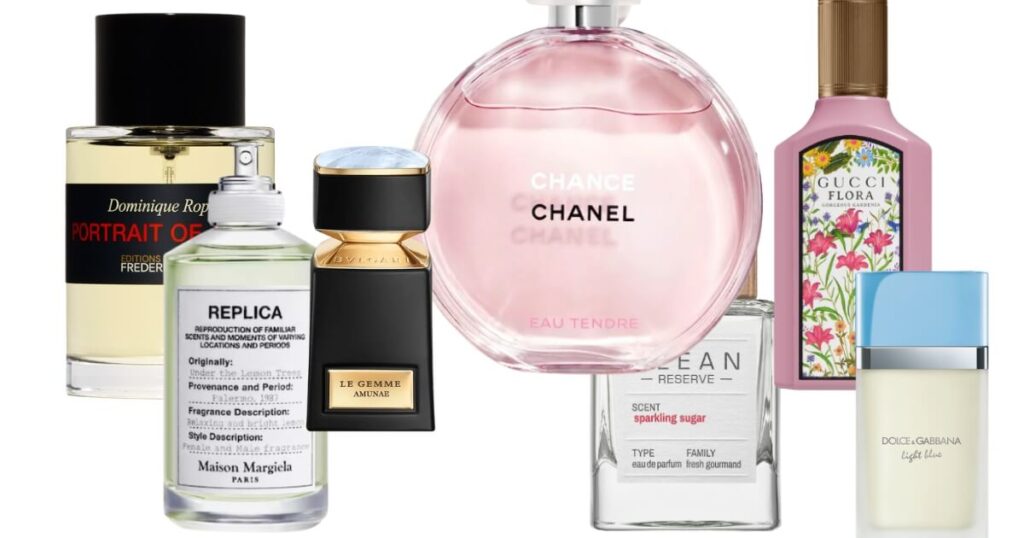
Scent layering is the practice of combining two or more fragrances to create something entirely new on your skin. It sounds complicated but it is really just about understanding which notes play well together and applying them in the right order.
Fragrances are built on top, middle, and base notes. When you apply one perfume and let it settle, then add another over it, the two blend with your skin’s natural warmth and chemistry to produce a scent neither could create alone.
The result is a signature that is entirely yours and nearly impossible to replicate.
This is also why scent layering has taken off the way it has. People are done smelling like a department store tester. They want something that feels personal, something with a little story to it. And honestly? Once you try it, there is no going back.
The way you smell is something people remember about you long after you have left the room. If you have been thinking about stepping into a more intentional version of yourself, starting with your signature scent is one of the most underrated places to begin.
How To Rebrand Yourself in 60 Days covers exactly that kind of intentional reinvention if you want to go deeper.
Scent Layering Guide for Beginners
How to Layer Scent
Like a Pro
A beginner’s guide to building a signature fragrance that is entirely yours
If you have never tried layering before, start simple. Two fragrances is plenty. Three can work but gets complicated fast when you are still figuring out what pairs well.
The basic rule is to apply from heaviest to lightest. Start with your base fragrance first, which is usually something warmer and deeper like a musk, a wood, or a vanilla. Let it settle for a few minutes, then spray your lighter, fresher scent on top.
The base holds everything together while the top note is what people catch when they come close.One more tip that makes a big difference: do not spray both at the same spot.
Put your base on your pulse points (wrists, neck, behind the knees)
and let your lighter scent go on your hair, clothes, or a different pulse point. This stops them from competing and lets both breathe properly.
What Is a Scent Layering Chart and How Does It Work?
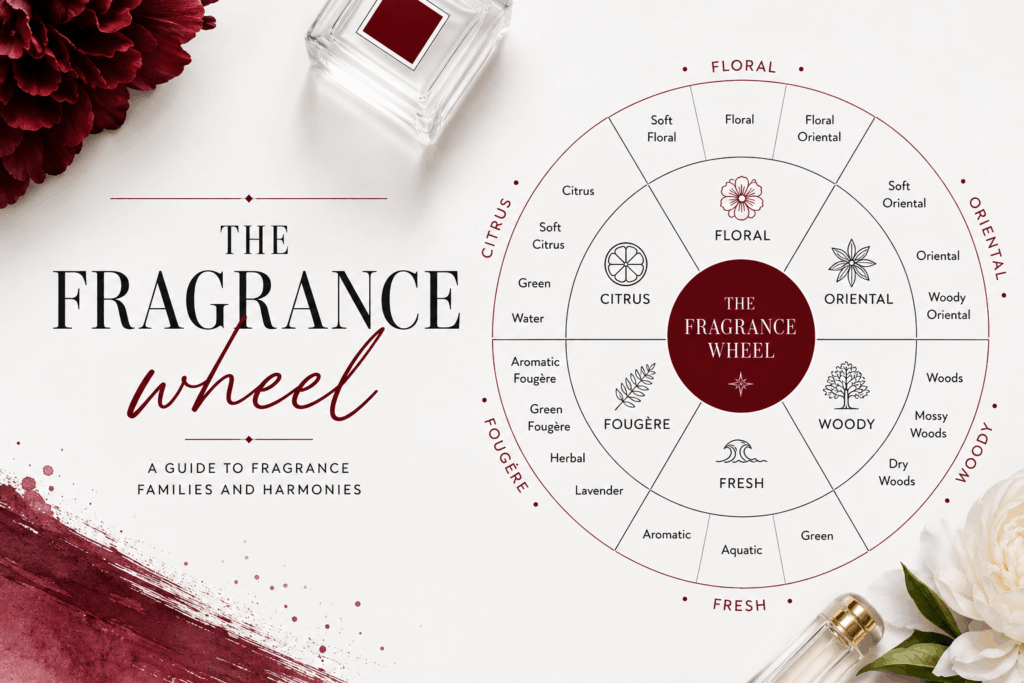
A scent layering chart is a visual guide that maps which fragrance families pair naturally together. Think of it like a colour wheel, but for scent notes. It helps you predict whether two fragrances will blend or fight each other before you waste product testing blind.
The most useful version organizes fragrances into families: florals, woods, musks, citrus, gourmand (vanilla and sweet), aquatic, and spicy. The chart then shows which families sit harmoniously together.
Florals pair beautifully with musks and light woods. Citrus brightens up anything too heavy. Gourmands and spices build warmth together.
You do not need to memorize the whole thing. The shortcut is this: if two fragrances feel like they belong in the same season or mood, they probably layer well.
A breezy summer perfume and a heavy winter oud are going to clash. While a light rose and a soft sandalwood are going to be perfect.
10+ Scent Layering Combos Worth Trying
The Combos That Make People
Stop and Ask
Six pairings worth trying first
These are the scent layering combos that actually hold up, the ones people keep coming back to and asking about. Some are classics. Some are a little unexpected. All of them are worth testing on your skin before you decide.
Rose + Musk
- Maison Francis Kurkdjian À La Rose — airy rose with soft musky warmth
- Narciso Rodriguez For Her Eau de Parfum — iconic musk with a sensual floral touch
- Le Labo Rose 31 — spicy, woody rose with a modern edge
Vanilla + Sandalwood
- Diptyque Eau Duelle — refined, non-gourmand vanilla
- Maison Margiela Replica By the Fireplace — smoky vanilla comfort
- Le Labo Santal 33 — smooth sandalwood perfection
Bergamot + White Tea
- Elizabeth Arden White Tea — soft and calming white tea scent
- Jo Malone Earl Grey & Cucumber — fresh citrus tea elegance
- Bvlgari Eau Parfumée au Thé Blanc — spa-like sophistication
Oud + Amber
- Tom Ford Oud Wood — smooth, wearable oud
- Maison Francis Kurkdjian Grand Soir — luxurious amber glow
- Initio Oud for Greatness — powerful yet elegant oud
Peach + Jasmine
- Gucci Flora Gorgeous Jasmine — radiant jasmine floral
- Tom Ford Bitter Peach — sensual ripe peach
- Burberry Her Elixir — creamy fruity-floral sweetness
Cedarwood + Citrus
- Acqua di Parma Colonia — timeless citrus freshness
- Byredo Super Cedar — dry modern cedarwood
- Maison Margiela Replica Under the Lemon Trees — fresh citrus with soft woods
Coconut + Vanilla
- Kayali Utopia Vanilla Coco 21 — creamy tropical vanilla
- Juliette Has a Gun Vanilla Vibes — salty vanilla beach scent
- Sol de Janeiro Cheirosa 62 — addictive sunny sweetness
Patchouli + Ylang-Ylang
- Chanel Coco Mademoiselle — elegant patchouli signature
- Tom Ford Black Orchid — dark floral richness
- Guerlain Samsara — warm floral sensuality
Black Pepper + Rose
- Le Labo Rose 31 — iconic spicy rose
- Byredo Rose of No Man’s Land — clean contemporary rose
- Maison Francis Kurkdjian Oud Satin Mood — velvety rose with spice
Vetiver + Fig
- Diptyque Philosykos — iconic green fig scent
- Miller Harris Figue Amère — bitter-green fig elegance
- Byredo Bal d’Afrique — soft vetiver with creamy brightness
Lavender + Tonka Bean
- Yves Saint Laurent Libre — feminine lavender with creamy warmth
- Mon Guerlain — elegant lavender and tonka softness
- Lancôme Lavandes Trianon — creamy lavender sophistication
How to Build Your Scent Layering Collection
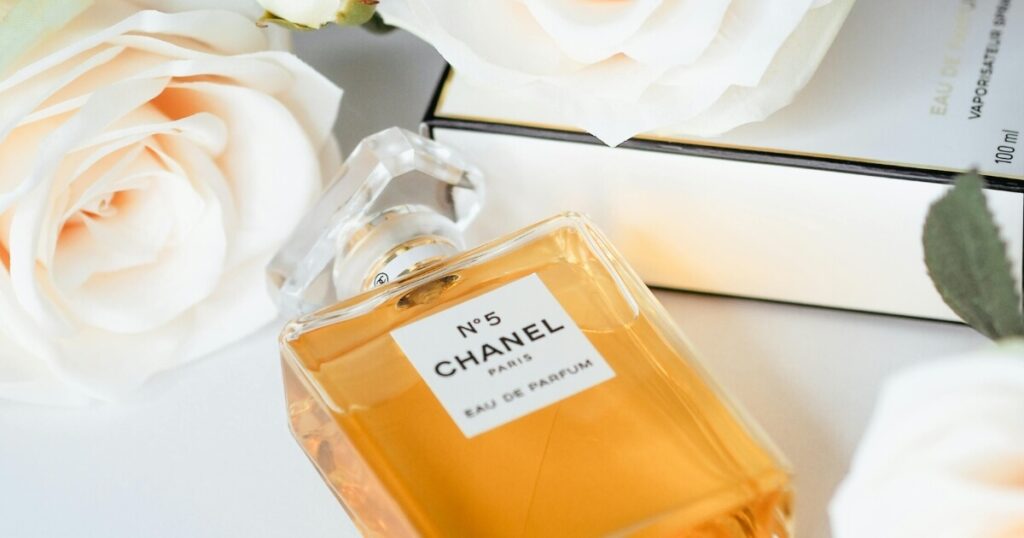
A scent layering collection does not have to be overwhelming. Five to seven fragrances chosen with intention will take you further than thirty bottles bought on impulse.
When building yours, think in families. Aim for one or two solid base fragrances (musks, woods, ambers), a couple of middle notes (florals, spice), and one or two lighter top notes (citrus, green, aquatic).
With those in place, you can mix and match across the whole range and rarely repeat the same combination twice.
Samples and discovery sets are your best friend here. Most fragrance houses and online retailers sell them, and they are a completely reasonable way to test a scent layering combo before committing to a full bottle.
Do not skip this step. I learned this the hard way with YSL Libre. In the bottle, it was one of the most beautiful things I had ever smelled. Soft, warm, a little intoxicating.
I was completely sold before I even sprayed it. Then I put it on my skin and within minutes all I could smell was sharp, almost medicinal lavender. Nothing like the bottle. Nothing like what I wanted.
The same perfume, completely unrecognizable on me. That is just how fragrance works on different skin chemistry, and no amount of reviews or tester strips will tell you what a scent will actually do once it is yours.
Also think about format. Body oils, lotions, and mists all layer differently than eau de parfums. A fragrance body oil as your base will hold longer and blend more smoothly with a lighter spray on top. Which brings up the most underrated move in the game.
The Lotion and Perfume Combo Most People Overlook
Build Your Full Scent Stack
From Shower to Perfume
Four moods, four complete routines. Layer each step for a scent that actually lasts.
A scented body lotion applied before your perfume is one of the oldest tricks for making fragrance last longer and sit better on the skin. Moisturised skin holds scent more effectively, and if the lotion shares notes with your perfume, they amplify each other instead of competing.
The simplest version: use an unscented or very lightly scented lotion first, then layer your perfume on top. Or match your lotion to your perfume’s family.
A vanilla-scented lotion under a gourmand perfume will make the whole combination richer and more long-lasting without buying an extra fragrance.
This is also a genuinely budget-friendly way to build more depth without buying more bottles.
A good lotion does more than most people give it credit for. If you want to build out the rest of your body care routine with the same kind of intention, How to Build the Perfect Body Care Routine is worth a read.
A Few Last Notes
Scent layering is not a complicated science. It is just paying a little more attention to what you are doing and being willing to experiment without overthinking it.
The combos on this list are a starting point, not a fixed rule. Try them, adjust them, swap one note for another, and see what your skin does with it.
The right combination is the one that makes you pause in front of the mirror and think: yes, that is exactly it. And if you are building more than just a scent, but an entirely new version of yourself, the 30-Day Glow Up Challenge is a good place to keep going.
Which combo are you trying first? Drop it in the comments. And if you already have a layering combination that is yours, share it. Someone else is going to want to steal it.
Frequently Asked Questions
- What are some popular scent layering combos?
Some of the most popular scent layering combos include rose and musk, vanilla and sandalwood, bergamot and white tea, oud and amber, and coconut and vanilla. These pairings work because the fragrance families complement each other rather than compete, creating something that feels personal and unique on the skin. - What is a scent layering chart and how does it work?
A scent layering chart is a visual guide that shows which fragrance families pair well together. It organizes scents into categories like florals, musks, woods, citrus, gourmand, spicy, and aquatic, then maps which ones blend harmoniously. The idea is similar to a colour wheel: some combinations work naturally, others clash. Using a chart helps you choose combinations before testing them, so you are not experimenting completely blind. - What is a scent layering guide for beginners?
For beginners, the key rules of scent layering are: start with two fragrances rather than three, apply the heaviest scent first and the lightest on top, spray them on different pulse points so they do not compete, and let each scent settle for a few minutes before adding the next. Starting with what you already own is the easiest way to begin experimenting without spending more. - What is a scent layering collection and how can you build one?
A scent layering collection is a curated set of fragrances chosen to work together in different combinations. To build one, focus on variety across fragrance families rather than buying many bottles from the same category. Aim for one or two base scents (musks, woods, vanillas), a couple of middle notes (florals, spice), and one or two lighter top notes (citrus, green). Discovery sets and samples are the most practical way to build your collection without committing to full bottles before you know what works on your skin.
Quick Summary
Scent layering is the practice of combining two or more fragrances to create a unique personal scent. This guide covers the best scent layering combos for beginners, how to use a scent layering chart to find compatible fragrance families, how to build a scent layering collection, and why a lotion and perfume combo can make your fragrance last longer. Whether you are looking for scent layering ideas or want to know what combinations work best, these pairings give you a starting point that actually holds up.